
In October 2025, Solana became directly connected to global, omnichain USDT liquidity via USDT0's new Legacy Mesh infrastructure. Stablecoins power a large portion of onchain finance, but their value is fragmented across blockchains. While distribution offers choice, it creates friction and operational cost, especially for institutions and applications that rely on deep, native liquidity.
Solana has emerged as a leading execution layer for high-volume finance, capturing $14B+ in stablecoin supply.
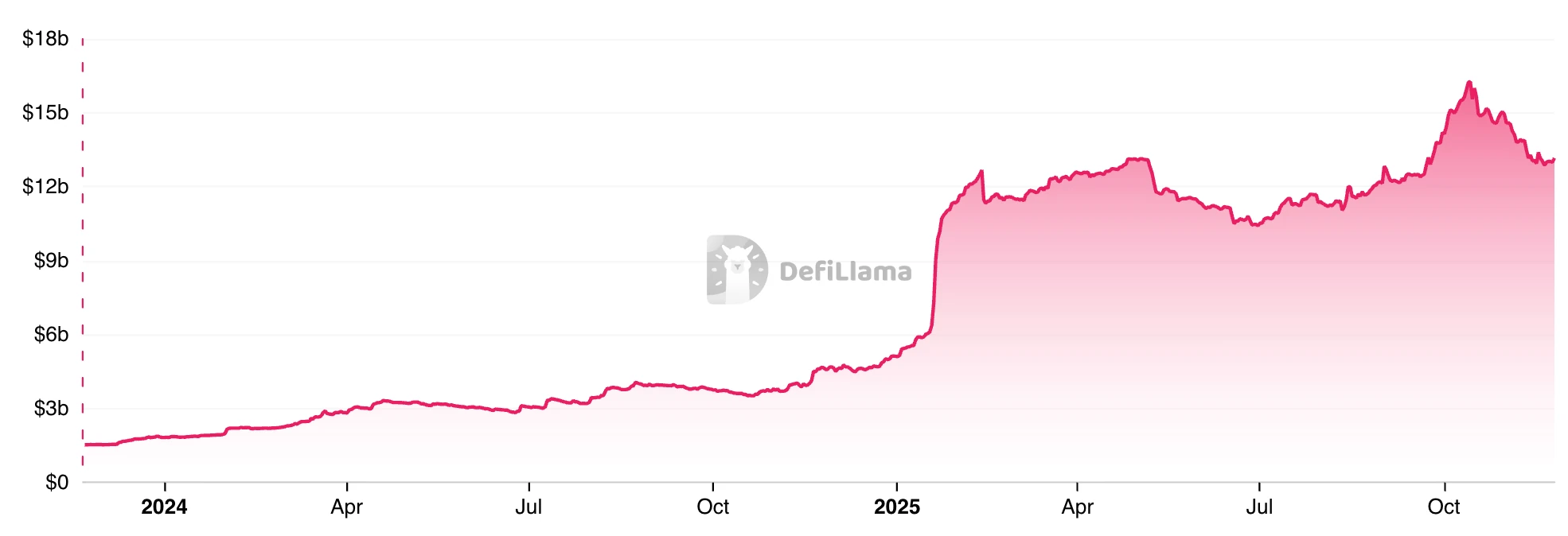
Source: DefiLlama
But until recently, Solana lacked native access to USDT, the world's largest and most liquid stablecoin ($175B+ in circulation). This case study explores how the Legacy Mesh integration solved that gap and why Solana's execution characteristics made it the logical home for unified global USDT liquidity.
Fragmented USDT liquidity creates operational costs
USDT is issued and used across many chains. That distribution gives users multiple options but fragments liquidity in ways that materially impact individual users, institutions, and applications.
One legacy workaround has been wrapped asset bridges. These third-party protocols lock assets on the source chain and mint synthetic representations on Solana. This model has inherent risk because the security of billions of dollars in wrapped assets depends entirely on the bridge's multisig validators.
These wrapped tokens require a custodian or a smart contract that holds the real asset elsewhere. This arrangement creates additional reconciliation work and an extra point of operational risk. Even when users move funds via bridges, the added latency, extra transaction steps, and incremental fees create friction.
These frictions translate into real costs:
- Market makers widen quotes to cover bridging delays
- Traders encounter higher slippage
- Payments services spend more on settlement and face worse user experience
- Developers build extra conversion steps into products or avoid certain use cases
What Legacy Mesh changes
The "Legacy Mesh" emerges as the antithesis to these models. Developed in partnership between Tether and Everdawn Labs, it utilizes LayerZero's Omnichain Fungible Token (OFT) standard. The Legacy Mesh does not create a synthetic copy of the asset. Instead, it extends the native properties of the asset across different chains.
The core innovation lies in the treatment of liquidity not as a series of isolated pools, but as a unified supply that can be seamlessly accessed and moved.
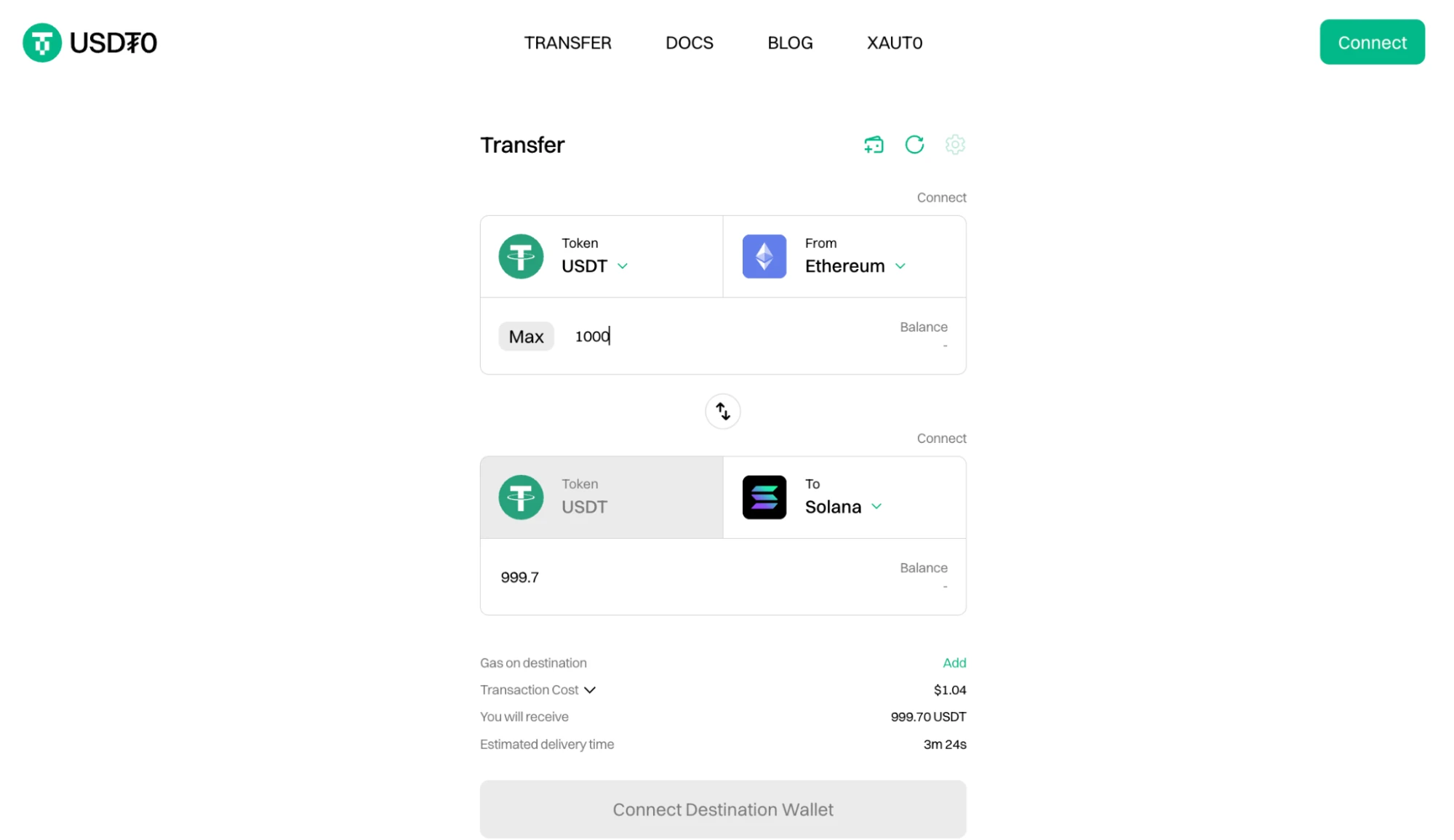
When USDT moves through the Legacy Mesh, it is essentially "re-domiciled" rather than wrapped. For Solana, this means that the USDT utilized in its DeFi protocols is no longer dependent on a third-party bridge's solvency.
Why does Solana matter as the destination?
At first glance, connecting USDT to an execution layer seems mechanical: pick a chain, deploy the token, and done. But USDT is already natively available on other chains, so why connect it to Solana. The real question isn't connectivity, it's usability at scale.
A usable execution layer must make transactions cheap, fast, and scalable. When native USDT reaches Solana, the network delivers exactly that:
- Fast finality: ~400ms block time of Solana means traders and institutions confirm settlements faster, reducing the capital overhead for managing settlement risk
- Low transaction cost. Solana maintains a median fee of $0.0013. This makes operations practical that are uneconomical elsewhere
- High throughput. Stablecoin use cases are latency-sensitive. Solana's parallel execution handles bursts atomically, keeping settlement predictable even under heavy load
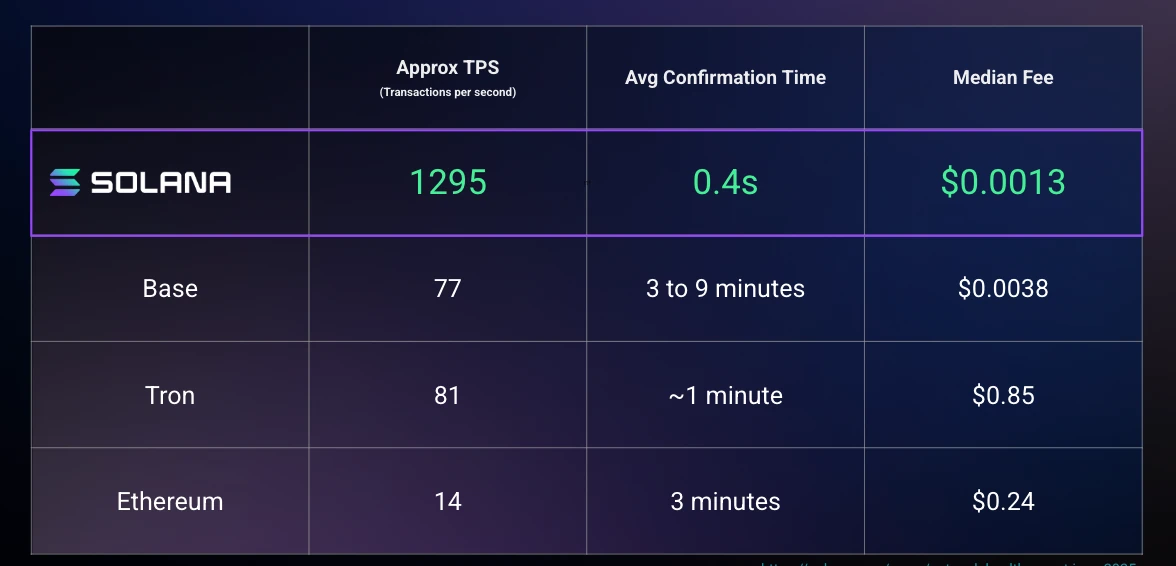
Solana answers the critical question: once USDT can reach a chain, can individuals and institutions actually use it effectively?
Connectivity supplies access; Solana supplies execution. Moving liquidity to Solana becomes worthwhile because Solana makes that liquidity easier and cheaper to use.
Operational Outcomes: The "Native" Advantage
The integration of native USDT on Solana delivers immediate, quantifiable improvements across the DeFi and institutional landscape.
Trading & Market-Making
Native USDT allows DEXs to consolidate liquidity into single, deep pools rather than fragmenting it across multiple wrapped pairs.
Outcome:
- Tighter spreads and reduced slippage for traders
- Liquidity providers face lower impermanent loss and reduced exposure to bridging risk
Lending and Borrowing Markets
Lending protocols can accept USDT as collateral without requiring a pre-deposit conversion step
Outcome:
- Simplified liquidation logic and improved solvency
- Institutions can deposit large tranches of capital with clear custody chains, avoiding the security anxiety of holding synthetic wrapped assets
Composed Financial Products
Yield aggregators and structured products often execute loops which are multi-leg strategies involving swapping, lending, and staking
Outcome:
- By removing the need for bridging or wrapping at each step, these strategies become more capital-efficient
- The reduction in cumulative fees translates directly to higher net APY for users
Where Unified Liquidity Meets Real-World Utility
USDT liquidity has historically been fragmented across blockchains. Legacy Mesh unifies all this liquidity into a single interconnected supply.
But unification alone is not enough. The real value appears only when the destination execution layer can make stablecoin settlement fast, cheap, and fully composable.
To that end, Solana's combination of 400ms finality, $0.0013 median fees, and high throughput crosses the threshold where stablecoin settlement outcompetes traditional finance for specific use cases.