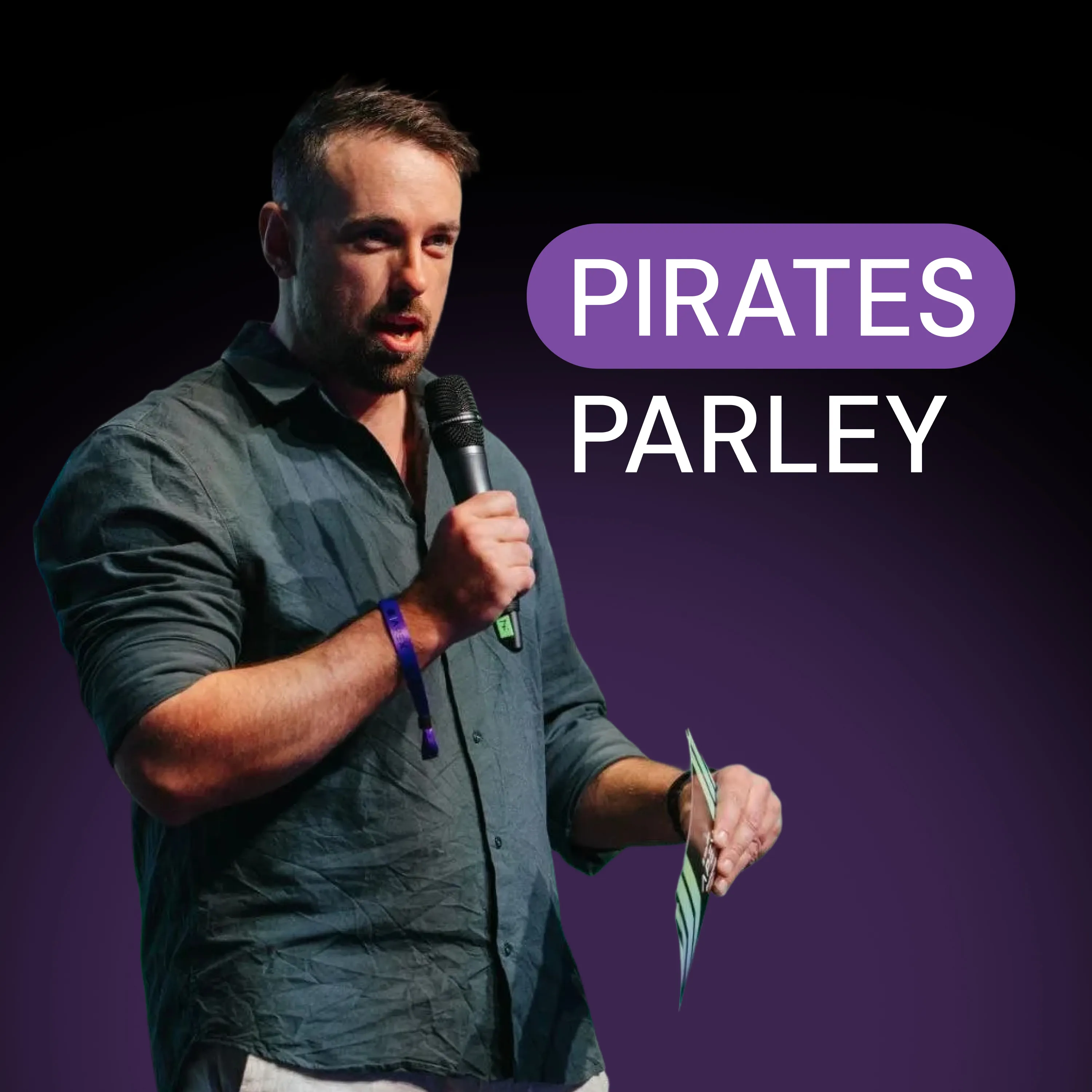
How exchange data became a monopoly and how oracles fix it
Marc Tillmann from Pyth Network explains how trading firms already own their execution data and can legally resell it. By aggregating real trade fills, Pyth creates synthetic price feeds that don't depend on exchange-licensed data - challenging a $10B/year exchange data monopoly.We cover PythNet's architecture as a Solana fork, the pull vs push oracle model, Pyth Lazer pricing, latency infrastructure, Double Zero integration, and oracle integrity staking.
How exchange data became a monopoly and how oracles fix it
Building cross-chain bridging: from aggregation to intent-based solving
Why AI agents need crypto: the next use case for on-chain assets
More from Pirates Parley

$4B in Two Months: Raydium on Tokenized Stocks and Solana as the Onchain NASDAQ
Raydium has survived two bear markets with a sub-20-person team running 70–80% margins. Ben Angari, who handles the commercial side at Raydium, says his DMs are a better bull market indicator than any chart, and inbound is up close to 10x. We get into what an AMM actually is, explained for my mom, and why lavish parties and paddock tickets make Ben bearish on a project. We also cover why nobody at Raydium wants to buy a farm and retire. Tokenized stocks are the big one: over a million holders on Solana, and $4B of Raydium’s $6B in tokenized equity volume in the last two months, most of it traded after US market hours. Ben shares his hot take that AI will make building expensive and tokens will fund the builders. Then come robot bodies, claw machines, tokenized tennis players, OPSEC after Drift, and why crypto Twitter is losing its grip. Also: the FTX-week Breakpoint in Lisbon, the first-ever Solana tattoo, and how I climbed through a window into the VIP room. This is the last Pirates Parley until after Breakpoint. Building something on Solana? Ben’s DMs are open. See you in London. 0:00 Welcome — last Parley before the break, Ben from Raydium1:31 "When my DMs are cooked": 10x inbound as a bull market signal3:42 Raydium for my mom: what an AMM actually does4:44 Adapt or die: 70–80% bear margins, <20 people, no plans to retire11:30 Alpenglow explained, and "you come for the king, you best not miss"15:44 Tokenized stocks: 1M holders, $4B in two months, after-hours trading20:36 StonkFi summer, gacha for stocks, and Collector Crypt23:46 Hot take: AI gets expensive, tokens fund the builders26:05 Robot bodies, claw machines, and tokenized tennis players30:55 Lisbon Breakpoint during FTX: "the last violinists on the Titanic"36:22 Steve's story: the first Solana tattoo and climbing into the VIP room41:09 OPSEC after Drift: "I am not clicking on a Vercel link"48:40 What's next for Raydium: acting as an extended arm of the team52:40 Hot take: crypto Twitter fades, traders become athletes58:49 Wrap — see you at Breakpoint London
Solana's Events Sensei Ellie: 24 Hacker Houses, a Bomb Threat, and Breakpoint London
Ellie spent 20 years producing events at weddings, Electronic Arts and Netflix before joining Solana in January 2022 with no roadmap and a mandate to build hacker houses. Her first year: 24 hacker houses in 18 countries in 10 months, plus a bomb threat in Miami. We get into how Breakpoint went from four venues scattered across Lisbon to one roof in London. Why there’s deodorant in the bathrooms and no pay-to-speak slots. What she’s building at Olympia: one main stage, a proper pub, and a Solana Borough Market. Plus the full side-event calendar, how not to waste your Breakpoint, and the first public word on where Breakpoint goes next: early September 2027. Also: Steve’s own origin story (it started with calling out scammers in the Breakpoint channel), a Porsche that should’ve been an Aston Martin, and nobody knowing what a Fuggler is. Breakpoint London: Nov 16–17 at Olympia (Day Zero Nov 15). Hacker House runs Nov 1–12. Ticket prices go up Nov 1. 0:00 Welcome — a Friday special with Solana's events sensei1:15 Steve's origin story: scam-busting the Breakpoint channel, quitting after Berlin3:10 20 years in events: weddings, EA, Simlish, and Netflix8:00 From COVID to crypto: the cold intro that landed her at Solana12:10 24 hacker houses, 18 countries, 10 months, planning from a closet14:39 The F1-style world tour: a bomb threat at 7,000-person Solana Miami16:45 Lisbon → Amsterdam → Singapore → Abu Dhabi: why Breakpoint went under one roof24:11 Breakpoint London: one stage, a proper pub, and Solana Borough Market29:09 What gives Breakpoint a soul: deodorant, water, and no pay-to-speak33:42 Business in the front, party in the back: designing for every persona38:40 No hierarchy: walking up to Solflare's CEO, and first-timer advice42:17 The side-event calendar: Hacker House, Demo Day, AI Day and more45:31 Too many side events, liver credit, a Porsche, merch and tickets51:02 Can you 10x every year? Diamond horses and Breakpoint 2027 in September54:58 Audience Qs: artists, Fugglers, the generator story, and goodbye
Who's Selling Your Swaps? Benjamin Boulin on Order Flow, MEV, and Getting Paid Back
Benjamin Boulin was running Minecraft servers at 11 and paying developers in Bitcoin by 2015. Today he's the founder of Circular, built after his arb team hit 30 million transactions a day and no tool on Solana could keep up. We get into how a simple swap leaks value to whoever controls the order flow, why platforms selling your swaps are earning double on you, and how Circular's monetization layer sends 65% of recovered arb profit straight back to the trader's wallet. Ben breaks down where a landing tip actually goes (Jito, Harmonic, SWQoS, direct to the leader), why every launchpad ends up building its own AMM, and why "we don't do MEV" is not the user protection it sounds like. Also: Counter-Strike skins lost to casinos, Valve's total control over your inventory, and what happens the day GTA 6 puts its cars on-chain. Fast transaction landing: landfast.io Circular: circular.fi 0:00 Welcome — one of my best friends in the ecosystem 1:40 Entrepreneur at 11: Minecraft servers, PayPal bans, and a broken financial system 7:07 A dev demanded Bitcoin in 2015 — and Ben didn't get it until Ethereum 12:00 Nifting: Steam meets Twitter for NFT skins 15:08 Who owns your skins? Valve's power and the GTA 6 on-chain test 21:45 Stablecoin arb on four chains — and the no-approval swap that sold him on Solana 27:30 Selling your swaps: why Triton won't, and the extortion nobody talks about 29:45 30M transactions a day: building Circular to track themselves 33:24 How your swap leaks value: AMMs, order flow, and the arb you never see 36:45 The monetization layer: what you're losing and how much comes back 44:28 Why every launchpad builds its own AMM 46:23 Integrating Fast: 1-cent tips, where they go, and 65% cashback 52:16 Colosseum builders: casino cranks, traders, and where to get RPC 56:33 Hidden fees and ignored priority fees: why validators should be angry 1:00:31 Counter-Strike, Trackmania, Risk — and next up: Ellie on Breakpoint