Why poker players make natural traders
If you play poker seriously, you have already learned the hardest parts of trading. You know how to size a bet, calculate the odds, handle a downswing, and how to act on incomplete information. These habits that you have formed can be used as the basis for becoming a successful trader.
Poker and trading are separate games with separate rules, but they ask for the same things from the participant. Both reward patience, arithmetic and discipline, and both punish the same mistakes.
The vocabulary and the mechanics are what remain, and this guide covers both. It explains what a wallet is, how spot and perpetual futures (perps) trading work, how to judge an exchange, and how to keep your funds safe, with the poker equivalent alongside each idea where relevant.
Why the skills that make a strong poker player also make a strong trader
What you need before you can place your first trade: a wallet, some SOL, and a stablecoin
How spot trading and perps work, including longs, shorts, leverage and liquidation
How to size positions and manage risk and a portfolio the way you manage a bankroll
How to judge an exchange on Solana, and how to protect your funds once you hold them
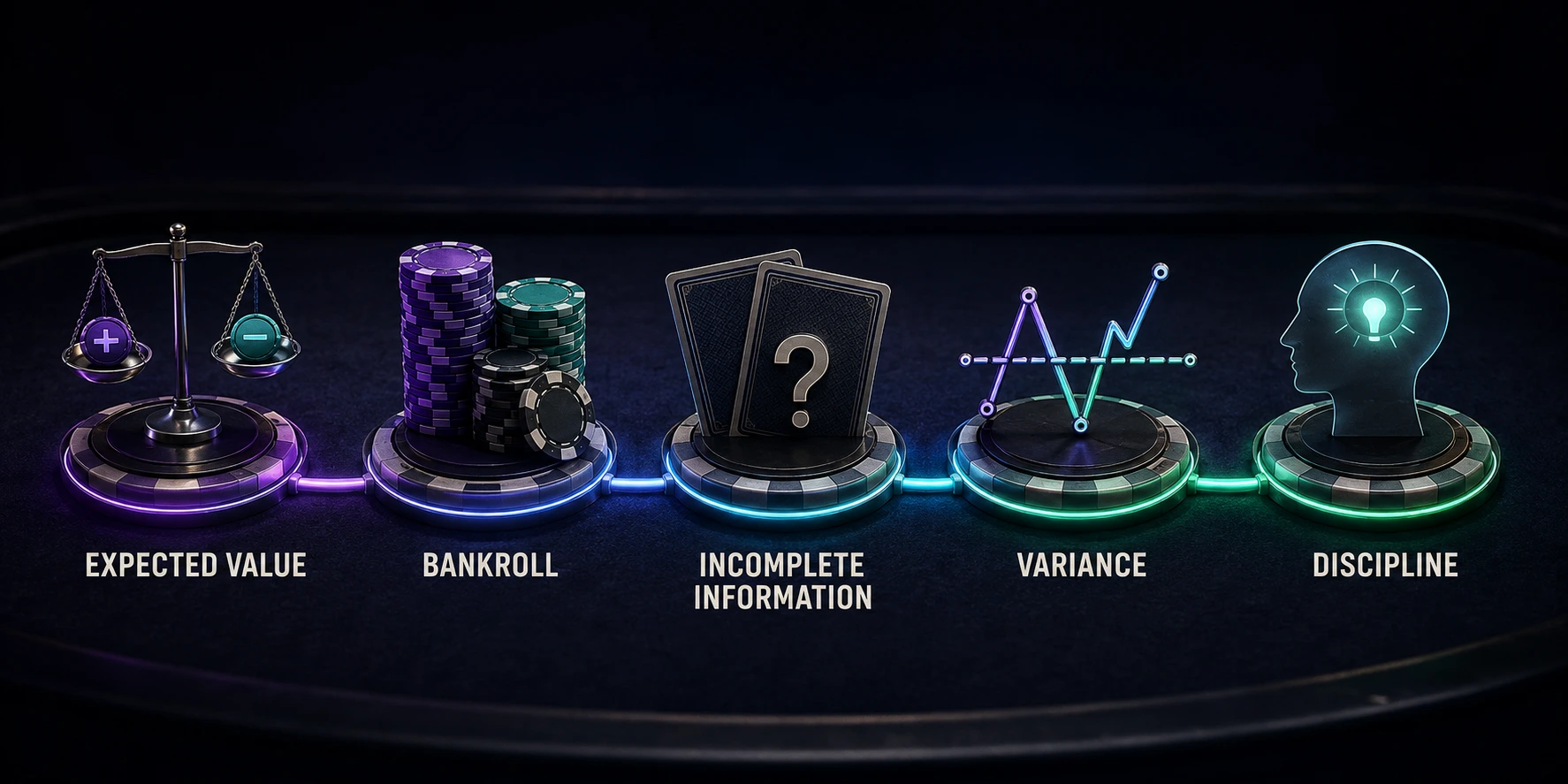
Five habits carry over directly
Expected value (EV): You already choose actions by their long-run payoff rather than their result on the day. A call that loses can still be correct, and a call that wins can still be wrong.
Bankroll management: You size your exposure to what you can afford to lose, and you never put the whole roll on a single hand. Traders call this position sizing and it does the same job.
Reading incomplete information: You act on partial information all the time, and you rarely see your opponent's cards. Markets work the same way. You will never have the full picture, and waiting for it means never acting.
Riding variance: You know the difference between running bad and playing badly. Markets produce long stretches where a sound approach still loses money, and the skill is telling the two apart.
Discipline over emotion: Tilt costs more money than bad cards. The same holds in trading, where chasing a loss or holding a losing position too long does more damage than any single decision.