
Solana-based platforms are turning vaulted physical collectibles into digital assets that can trade instantly while the item remains in custody. The model now spans cards, wine, spirits, watches, comics, and other collectibles — with Collector Crypt alone reporting more than 130,000 tokenized cards and $1.6 billion in total volume.
A PSA 10 Charizard sitting in a U.S. vault may be worth several thousand dollars. Selling it through traditional channels can still mean finding a buyer, negotiating, accepting payment, insuring and shipping the slab, and managing the risk of a dispute.
A physical market with digital-scale demand
The market for physical trading cards is large, active, and increasingly operationally complex. The Pokémon Company had produced more than 85 billion cards by the end of March 2026, with roughly 10 billion printed in the past fiscal year.
PSA graded more than 19 million cards in 2025, up from 2 million in 2020. At the upper end of the market, a PSA 10 Pikachu Illustrator sold for $16.49 million at auction in February 2026.
Most cards trade at far lower prices, but they pass through many of the same steps: authentication, payment processing, packaging, insurance, and delivery. If the buyer later sells the card, several of those steps may be repeated.
Moving ownership without repeatedly moving the card
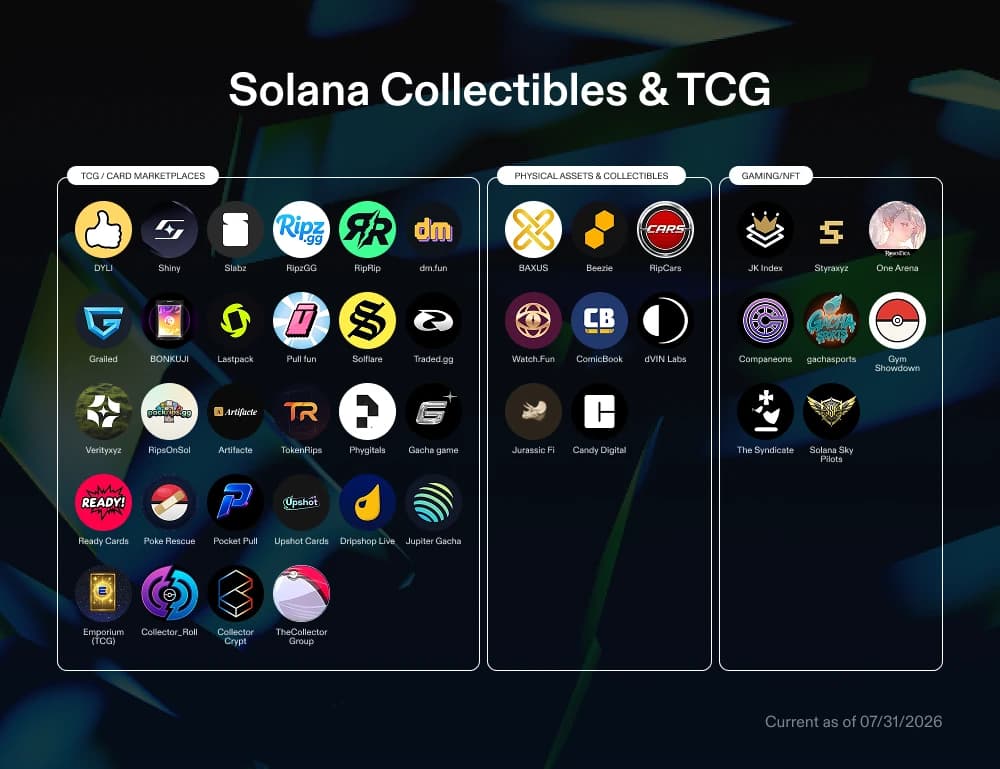
Solana-based collectible platforms are trying to remove that friction by representing claims on vaulted physical assets onchain. Some tokens map to a specific item; others represent inventory redeemable for an equivalent one.
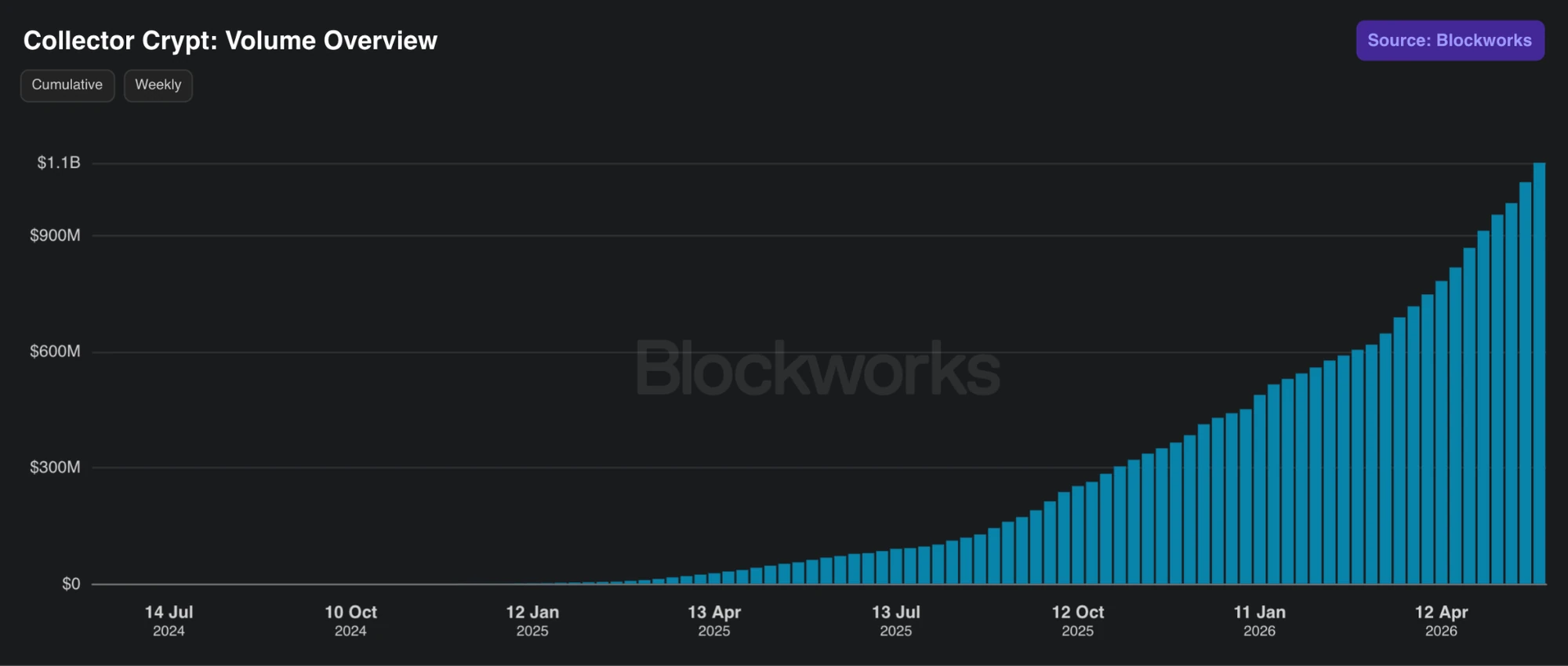
Collector Crypt lets collectors open randomized packs, hold the resulting assets, trade them, use an eligible buyback, or redeem the physical card. The platform has more than 130,000 tokenized cards and crossed $1.6 billion in total volume.
Phygitals combines physical custody with onchain ownership. Every card on the platform is backed one-to-one by a professionally graded card held in vault custody, and owners can trade the digital representation or request shipment of the underlying card. Phygitals has more than 100,000 tokenized cards and over $250 million in total volume.
Beezie supports tokenization for collectibles deposited into its vault, including graded cards and sealed products. Beezie crossed $2 million in volume within two days of its launch on Solana.
Ready Cards offers PSA-graded inventory with options to keep, sell, or request delivery.
DYLI combines primary sales, secondary trading, vault storage, and physical redemption across cards and other collectible goods.
How a graded card becomes an onchain asset
After a card is graded, a platform or custody partner verifies it, places it in a vault, and creates an onchain asset containing details such as its set, grade, and certification. Transfers update ownership without moving the slab; redemption triggers shipment and retirement of the digital representation.
Submission procedures vary by platform. Collector Crypt lets users submit cards for tokenization, with storage in insured third-party vaults. Phygitals allows collectors to submit graded cards for custody and digitization, while Beezie accepts a wider range of submitted collectibles. Other platforms source and tokenize their own inventory, and custody providers can make the resulting inventory available through several consumer applications.
Different claims on physical inventory
The relationship between a digital asset and a physical card is not identical across products. Collector Crypt and Phygitals associate an onchain asset with vaulted inventory, while Gacha and Pull.fun describe their card inventory as physically backed and available for redemption.
Other platforms provide for redemption through third-party custodians. RipzGG uses a different fulfillment model: It sells virtual cards and separately allows eligible graded cards to be fulfilled with a sourced physical slab of the same identity and grade, or a qualifying substitute under its terms.
Distribution through consumer applications
Tokenized card inventory is appearing across wallets, trading interfaces, established marketplaces, and specialist pack applications. That distribution lets consumer products focus on discovery, opening, trading, resale, or redemption while drawing from vaulted inventory.
Phygitals integrated with Fanatics Collect, putting tokenized inventory inside one of the largest traditional trading card marketplaces.
Solflare Packs launched in June as an in-wallet product powered by Collector Crypt. Users can browse, purchase, and reveal graded cards without leaving the wallet, then hold the card onchain, request shipment, or use an available resale option. During its first week, Solflare Packs recorded more than 10,000 pulls from over 1,000 collectors, with cards representing nearly $5 million in insured value.
Rarible launched Gacha Station in June using Collector Crypt inventory, with packs spanning Pokémon, One Piece, anime, and sports cards starting at $25. Jupiter Gacha, also built with Collector Crypt, opened its beta on July 13 with authenticated Pokémon and One Piece slabs and crossed $9 million volume in five days of launch.
Other products specialize by audience or format:
- Gacha Sports focuses on sports cards.
- Shiny focuses on Pokémon and One Piece.
- Drip Shop Live centers on live commerce.
- BONKUJI, RipRip, and Lastpack offer additional pack formats, including raw card pulls.
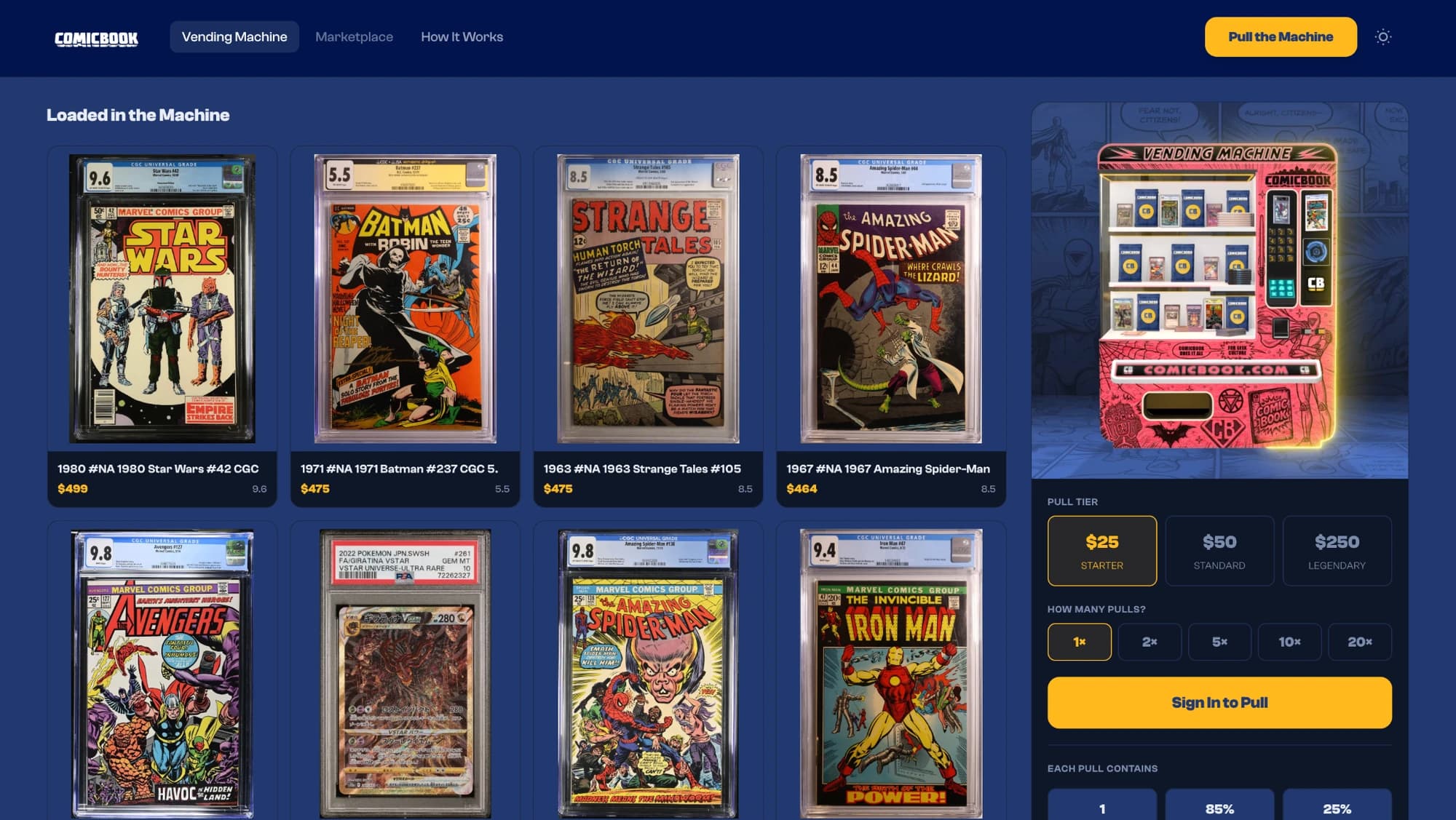
- ComicBook.com’s Vending Machine, built with Collector Crypt, applies a similar interaction to comics and cards, with storage, resale, and shipment available after a pull.
Solana as the transaction layer
Collectible applications can involve frequent transfers across assets with widely different values. A lower-priced card cannot absorb the same transaction cost as a rare slab worth thousands of dollars.
A standard Solana transaction typically costs a fraction of a cent. Keeping the network portion of a transaction small relative to the asset value allows applications to support lower-priced cards and repeated actions within the same session.
Fast confirmation allows ownership changes to appear within a continuous product flow. A user can open a pack, receive the resulting asset, and complete a later transaction without waiting for a physical settlement process. Application fees, payment processing, inventory costs, and buyback terms remain separate from the network fee.
Solana wallets give applications a common way to identify an owner and authorize a transaction. When providers use shared asset standards, applications can read the same ownership and metadata records without designing a new asset format for every interface.
Solana has the largest gross tracked card-related activity volume, exceeding Base and Polygon combined, and now consistently represents roughly 75% of onchain trading card game volume. The underlying cards market dashboard tracks the category across networks.
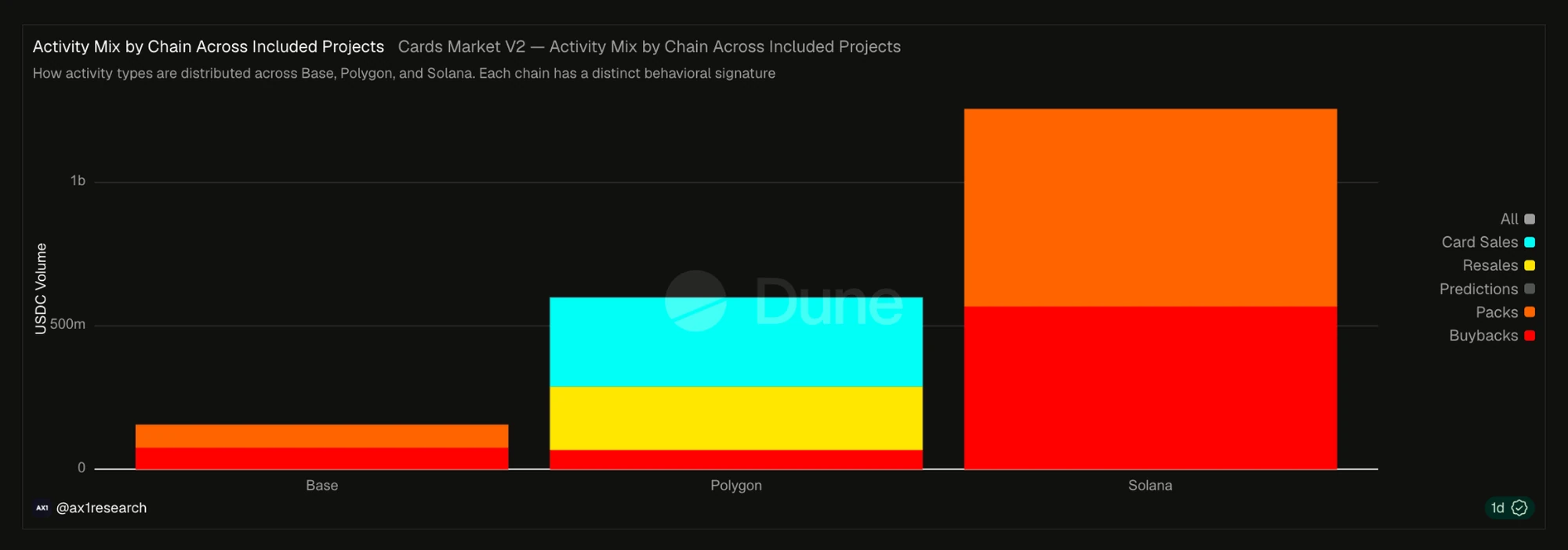
Source: https://dune.com/ax1research/cards-market
Marketplaces, games, and collector tools
Not every collectible transaction requires a shared vault model. A growing set of tools is building marketplaces, aggregation, game systems, and collection experiences around physical and digital cards.
- JK Index combines price data and collection tracking with a marketplace in public beta. Its marketplace uses USDC on Solana and escrow while the seller ships the physical card, so the item does not have to remain in a shared vault for the transaction.
- Traded.gg is building an aggregation and execution layer for collectible markets.
- Artifacte launched in May as a real-world asset aggregator for luxury collectibles and card lines, and is developing auction infrastructure with an emphasis on authenticated inventory and provenance.
Pack opening is a common entry point across card applications. Several products are adding persistent collections and game systems around the assets.
- Pocket Pull adds digital binders, quests, guilds, and leaderboards, and passed $500,000 in volume shortly after launch.
- Slabz debuted an arcade format around physical collectibles. Its Packz product uses tickets and games that can lead to card rewards or redemption.
- Styra places collectible cards inside an explorable game world where players encounter and capture slabs.
- One Arena uses cards in competitive matches. It has crossed $3.3 million in total volume with more than 7,000 matches.
The category also overlaps with digital card games whose assets do not represent physical inventory. The Syndicate uses character collectibles and season assets in a Solana-based game, Companeons connects digital collectibles with several games, and Upshot Cards creates cards around real-world outcomes and prize redemption. These products share card-shaped interfaces with the physical collectible market, but the rights attached to their assets are different.
Liquidity beyond secondary listings
Several products also provide predefined buybacks for eligible pulls. The percentages, eligibility windows, and pricing methods vary.
- Collector Crypt and Phygitals offer immediate resale mechanisms on qualifying cards.
- Beezie’s SWAP feature gives eligible pulls a 15-minute offer of up to 90 percent of Beezie’s calculated fair market value.
- Cards pulled through Solflare Packs carry a 72-hour buyback window from Collector Crypt at a known price.
- Jupiter Gacha pulls carry a buyback of at least 85 percent of insured value for three days.
- Ready Cards, Gacha, Pull.fun, Shiny, and RipzGG publish their own sellback or fulfillment terms.
Card-backed borrowing adds another possible use. Jupiter Offerbook supports fixed-rate, fixed-term loans against physical graded cards represented onchain through Phygitals or Collector Crypt, with the card serving as collateral.
Sunrise and Meteora introduced Dynamic Assets, a token category for onchain ownership of real-world goods with fragmented liquidity. The first Dynamic Asset, $SV151, is designed to give holders exposure to a reserve acquiring sealed Pokémon Scarlet & Violet 151 packs, with Bedrock Foundation responsible for the reserve and custody structure.
Digital collectibles and licensed IP
Candy Digital represents a related part of the category. Its assets are licensed digital collectibles rather than claims on vaulted physical cards.
Candy announced the migration in April 2026 and began moving its collectibles to Solana in June 2026. Candy is migrating assets using Metaplex Core, giving eligible collectors self-custody through Solana wallets and access to supported third-party marketplaces. Unopened packs retain their existing state during migration.
Licensed digital collectibles have different requirements from vaulted cards. Rights holders may define how intellectual property can appear across marketplaces, and royalty settings and asset metadata continue to apply after an item moves into a collector-controlled wallet.
Physical collectibles beyond cards
Related ownership and custody models are also being applied to assets that require specialized storage and eventual delivery. Each category introduces its own operational requirements: graded cards have certification numbers and established grading standards; wine requires environmental controls and provenance records; watches require inspection and secure delivery; fossils introduce another set of documentation and custody considerations.
- BAXUS uses Solana for collectible wine and spirits held in controlled storage. Bottles can be represented onchain, traded while stored, and redeemed for physical delivery. In May, BAXUS introduced physical asset vending products for direct spirits collection and trading.
- JurassicFi has announced Deaton, a museum-grade Triceratops prorsus skull with between 60 and 65 percent complete bone mass, as a physical asset coming to Solana.
- dVIN Labs links bottles to Digital Cork records for provenance and ownership.
- Watch.fun applies Solana to a different model: an onchain raffle in which authenticated watches sourced through Wristcheck are awarded to winners.
- DYLI lists watches and other physical goods alongside cards, while ComicBook.com’s Vending Machine extends the pack format to comics.
As inventory becomes accessible through multiple applications, consumer products can specialize in discovery, trading, or collection experiences while custody providers maintain the physical assets.
Resources
For more on Solana-based collectibles, custody models, and digital ownership, explore these interviews and reports:
- From Sotheby's to Solana: Exploring Digital Collectibles with Tad Smith, Candy Digital
- From Collector to Founder: Tuom Holmberg’s Bet on Onchain Collectibles
- Phygitals Turned Childhood Pokémon Packs Into a $180M On-Chain Marketplace
- Solana, Fanatics, and $180M in Tokenized Collectibles | Phygitals CEO
- ComicBook.com Launches on Pokémon Pack Ripping and a P2P Marketplace on Solana
- Gotta Catch ‘Em All? Tokenized Pokémon Cards Are Exploding Right Now
- Dial In: Colada From Phygitals On Tokenizing Pokemon Cards