What Happens When the World’s Assets Move Onchain?
In today's episode of Talking Tokens, Jacquelyn sits down with Gregg Bell, Chief Investment Officer at Hashgraph, to discuss what institutional blockchain adoption of Hedera actually looks like and why some of the most important enterprise use cases may be happening outside the crypto headlines. Gregg breaks down how Hedera is being used across industries, why tokenization extends far beyond stocks and securities, and how moving assets onchain can unlock greater mobility, programmability and new forms of collateral. They explore real-world assets, enterprise adoption, supply chains, tokenized real estate, digital identity, interoperability and the infrastructure required to support global financial markets. Also explains why institutional adoption takes longer than retail adoption, how regulatory clarity is changing the risk calculus for enterprises, the role of HBAR within the Hedera ecosystem, and why actual network usage not hype is ultimately the measure of success.
Timestamps: 00:10 Gregg Bell's journey into crypto 01:06 From Bitcoin lending to onchain assets 01:53 How blockchain's user base is changing 03:06 How enterprises and governments use blockchain 04:58 Tokenizing assets beyond securities 06:28 When will more assets move onchain? 08:01 What institutional adoption actually looks like 10:19 Enterprise blockchain happening behind the scenes 12:57 Why the first wave of enterprise adoption struggled 16:09 Public, private and hybrid blockchain infrastructure 17:49 Are institutions finally comfortable with blockchain? 18:56 The role of HBAR in Hedera's ecosystem 21:11 What financial-grade blockchain infrastructure requires 23:05 Who captures the value from tokenization? 23:47 Are we entering a new era of financial access? 24:28 What success looks like for Hedera
This episode is sponsored by Forgd, visit its Market Maker Leaderboard on Token Relations here: www.stratamedia.co/token-relations/leaderboard
Today’s episode is sponsored by Anchorage Digital, America's first federally chartered digital asset bank and provider of regulated stablecoin issuance. To find out more, visit anchorage.com
New episodes every week https://open.spotify.com/show/0LOgWxIQ0NnNUD5eXsSuoZ https://podcasts.apple.com/us/podcast/talking-tokens/id1743669141
Follow us Jacquelyn on X: /jacqmelinek Talking Tokens on X: /_talkingtokens Talking Tokens on Instagram: /_talkingtokens
Follow Gregg Bell https://www.linkedin.com/in/gregg-bell-38b5389
What Happens When the World’s Assets Move Onchain?
Subscribe & Listen
Why Stellar Thinks Its $4B Tokenization Milestone Is Just the Beginning
Why Grove Is Betting Billions on Onchain Credit | Kevin Chan
More from Talking Tokens

Why Institutions Can't Move Onchain Without Privacy
Public blockchains make transactions transparent, but that transparency can become a major obstacle for institutional adoption. Financial institutions need to protect sensitive transactions, trading positions, and investment strategies without giving up the benefits of blockchain. As more capital moves onchain, privacy is becoming a critical part of the infrastructure needed to support institutional finance. In this edition of Strata Media Research, Jacquelyn Melinek sits down with Alexander Beaudry from the institutional research team to explore why onchain privacy matters and which technologies could help institutions operate privately. Alex breaks down shielded pools like Zcash, Monero, and Railgun, trusted execution environments (TEEs), permissioned networks like Canton, and emerging institutional privacy solutions from Zama. They also discuss how institutions can use DeFi without exposing their strategies to competitors, why fragmented liquidity and interoperability remain major challenges, and Alex's prediction that shielded liquidity could grow at least 5X over the next few years as institutional adoption accelerates. Timestamps 00:00 Why Onchain Privacy Matters for Institutions 01:34 Is Crypto Privacy Just for Criminals? 02:15 Why Institutions Need Onchain Privacy 03:57 How Blockchain Privacy Technologies Work 05:00 Shielded Pools, TEEs, and Permissioned Ledgers 06:25 Which Privacy Architecture Works Best for Institutions? 06:39 Why Permissioned Blockchains Appeal to Institutions 07:20 Private DeFi and Institutional Privacy Solutions 08:42 The Biggest Challenges Facing Onchain Privacy 09:22 The Problem With Privacy Interoperability 09:54 What's Next for Onchain Privacy? 10:11 How Mature Is Blockchain Privacy Technology? 10:40 Why Shielded Liquidity Could Grow 5X 11:39 Making Financial Privacy More Accessible ▫️Check out the report: site: https://stratamedia.co/token-relations/article?slug=why-crypto-should-care-about-privacy X: https://x.com/TokenRelations/status/2117681044564398422?a=DJPqRL3xwQJVqSFI4sQ&s=20 linkedin: https://www.linkedin.com/pulse/why-crypto-should-care-privacy-stratamedia-m5tte ➡️ Follow Talking Tokens https://x.com/_TalkingTokens?lang=en https://open.spotify.com/show/0LOgWxIQ0NnNUD5eXsSuoZ https://podcasts.apple.com/us/podcast/talking-tokens-crypto-onchain-finance-investing/id1743669141 https://talkingtokens.beehiiv.com/ ➡️ Follow Jacquelyn https://x.com/jacqmelinek #Robinhood #StockTokens #Tokenization #MarketStructure #TalkingTokens
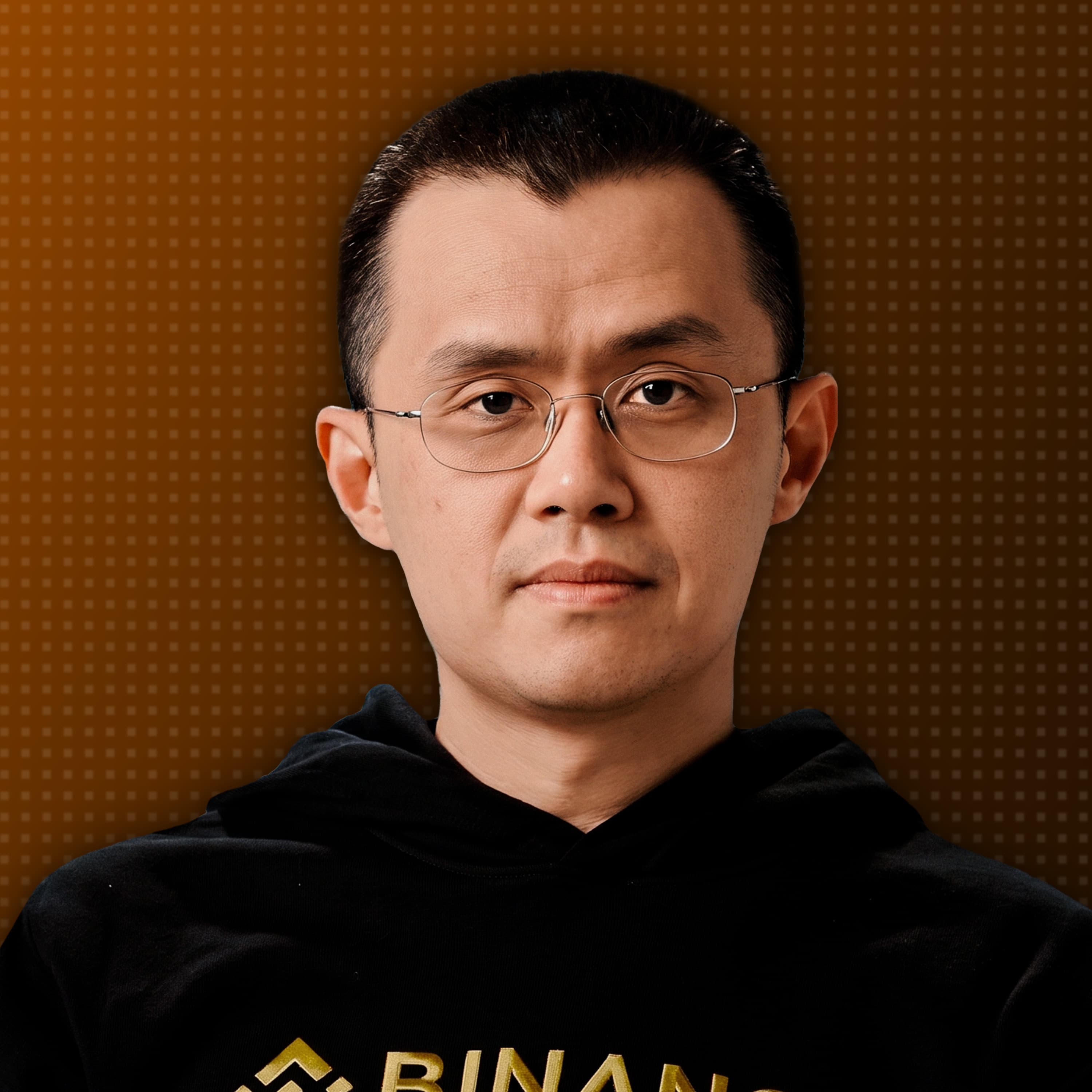
CZ's First Interview After The $6.3B Binance Hack & Where We Go From Here
In today's episode, we brought on Changpeng "CZ" Zhao, founder of Binance, live to talk about the $6.3B Binance hack, how he found out about it and what he thinks the industry needs to change. We get into how Binance and the industry responded, what it means for users, how he thinks about North Korean hackers after the exploit and where crypto, AI, businesses and the wider industry go from here. 🌐 3 Key Takeaways ▪︎ CZ says "all the hacks are preventable" and that companies "have a tendency to sort of get complacent over time." ▪︎ He says "we've got to use more AI to defend," since "the only way to fight a monster is to kind of become that monster." ▪︎ CZ says "Binance, the industry as a whole, have not invested enough in security" and "we just got to be very diligent throughout this sort of turbulent time." Timestamps 00:00 Introduction: Changpeng "CZ" Zhao, Founder of Binance 00:44 How CZ Found Out About the Hack 01:31 Containing the Hack and Calming Users 02:42 Why CZ Thinks All Hacks Are Preventable 03:23 Is This Now a National Security Problem? 04:58 Is Crypto Ready for Mainstream Adoption? 06:58 Trump, North Korea and Washington 08:15 How AI Is Changing Crypto Security 09:51 Why CZ Wants a Crypto Security Alliance 10:59 What Comes Next for Crypto and AI 12:58 Is CZ Still Bullish? 13:24 Why the Market Stayed Calm 15:35 Deposits Overtake Withdrawals 18:00 CZ's Advice for the Industry and Retail Users Disclaimer: Binance sponsors Talking Tokens, but this interview was not commissioned by Binance. Note Binance is not available in certain countries, including the U.S. See its Terms: https://www.binance.com/en/terms 🌐 Follow Jacquelyn Melinek https://x.com/jacqmelinek?lang=en https://www.linkedin.com/in/jacquelynmelinek

The Future of Digital Assets & Blockchain at Morgan Stanley | Amy Oldenburg
In today's episode of Talking Tokens, Jacquelyn sits down with Amy Oldenburg, Head of Digital Asset Strategy at Morgan Stanley, to explore how one of Wall Street's largest financial institutions is integrating blockchain, cryptocurrency, and artificial intelligence into its financial services. Amy discusses Morgan Stanley's expanding digital asset strategy, the growth of its Bitcoin exchange-traded products (ETPs), and the launch of spot crypto trading through E*TRADE in partnership with Zero Hash. They also dive into tokenization, AI agents, 24/7 financial markets, and the future of traditional banking. Amy explains how Morgan Stanley is exploring tokenized assets, DeFi vaults, and new investment opportunities through its Digital Asset Lab. From modernizing financial infrastructure to reducing settlement friction and keeping assets on digital rails, this conversation explores how blockchain and AI could transform the way financial institutions operate, invest, and serve clients. Timestamps 0:00 — Introduction: Amy Oldenburg 01:24 — Amy Journey Into Digital Assets 03:23 — Why Emerging Markets Need Digital Assets 04:45 — Why People Resist Crypto and New Technology 05:49 — Could AI Accelerate Blockchain Adoption? 07:53 — Emerging Markets and 24/7 Trading 09:25 — Why Financial Markets Need an Infrastructure Upgrade 10:04 — Morgan Stanley's Digital Asset Research 12:00 — Tokenization and the Future of Banking 13:09 — Morgan Stanley's Crypto ETP Growth 14:34 — Why Investors Are Buying Bitcoin ETPs 15:43 — Moving Spot Crypto Into Investment Products 16:30 — Morgan Stanley's Global Crypto Strategy 19:05 — Could AI Agents Change Traditional Banking? 20:50 — How Blockchain Is Changing Financial Operations 22:38 — E*TRADE, Zero Hash, and Morgan Stanley's Crypto Expansion 23:54 — Inside Morgan Stanley's Digital Asset Lab 24:42 — DeFi Vaults and New Investment Products 27:49 — Morgan Stanley's Tokenization Strategy 28:56 — Why Tokenization Starts With Infrastructure 29:23 — The Future of Onchain Finance and Digital Money 31:35 — The Challenges of Tokenized Assets 33:25 — Why Security and Infrastructure Matter 35:00 — What's Next for Digital Asset Adoption? 36:33 — Redesigning Traditional Financial Systems 38:54 — Amy Advice for the Next Generation 🔔 New episodes every week https://open.spotify.com/show/0LOgWxIQ0NnNUD5eXsSuoZ https://podcasts.apple.com/us/podcast/talking-tokens/id1743669141 🌐 Follow Jacquelyn Melinek https://x.com/jacqmelinek?lang=en https://www.linkedin.com/in/jacquelynmelinek ➡️ Follow Amy Oldenburg https://www.linkedin.com/in/amyoldenburg https://www.instagram.com/popular/amy-oldenburg/ https://x.com/AmyOldenburg_ This episode is sponsored by Securitize, the proven leader in tokenized funds, equities, and private markets. Discover more at securitize.io