
March brought a dense run of developments across regulation, real-world assets, enterprise infrastructure, payments, consumer apps, and protocol design.
SOL received a clearer regulatory designation in the U.S., RWA activity on Solana reached new highs across holders, value, and lending. Enterprise platforms pushed more Solana infrastructure into live systems. At the protocol layer, Anza introduced a proposal that would change how block production works on the network.
Regulatory Clarity
On March 17, SOL was classified as a digital commodity under federal law through joint SEC and CFTC interpretive guidance covering 16 crypto assets. The guidance also excluded protocol staking from securities regulation, adding a clearer legal framework for validators, staking providers, and institutional participants working across the Solana ecosystem.
Real-World Assets
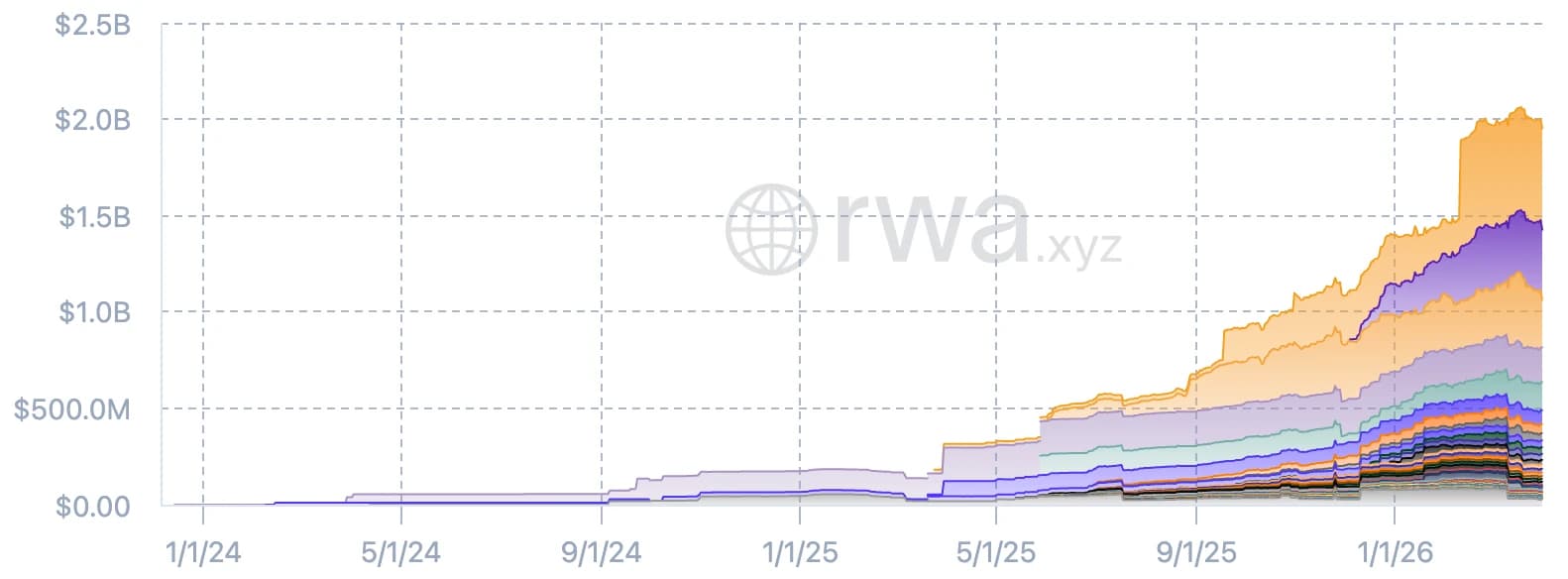
RWAs remained one of the clearest growth stories on Solana in March. The total RWA value on the network crossed $2 billion. Early in the month, Solana moved past Ethereum in total RWA holders for the first time, according to RWA.xyz. By month end, that figure had reached a record 182,000 holders. Solana's RWA lending deposits reached $1.2 billion, leading all networks and, by late March, Solana had settled roughly 94% of all-time onchain tokenized equity spot volume.
Source: rwa.xyz
Public market products expanded as well. Ondo broadened Ondo Global Markets to more than 250 tokenized stocks, ETFs, and commodities across Solana, Ethereum, and BNB Chain.
Credit and settlement infrastructure kept moving. Loopscale released PRISM to aggregate RWA settlement liquidity, beginning with Apollo’s ACRED fund. The team also launched the first credit market denominated in Brazilian Real on Solana, pairing Transfero Group’s BRZ stablecoin with Etherfuse’s TESOURO tokenized Brazilian treasury bonds.
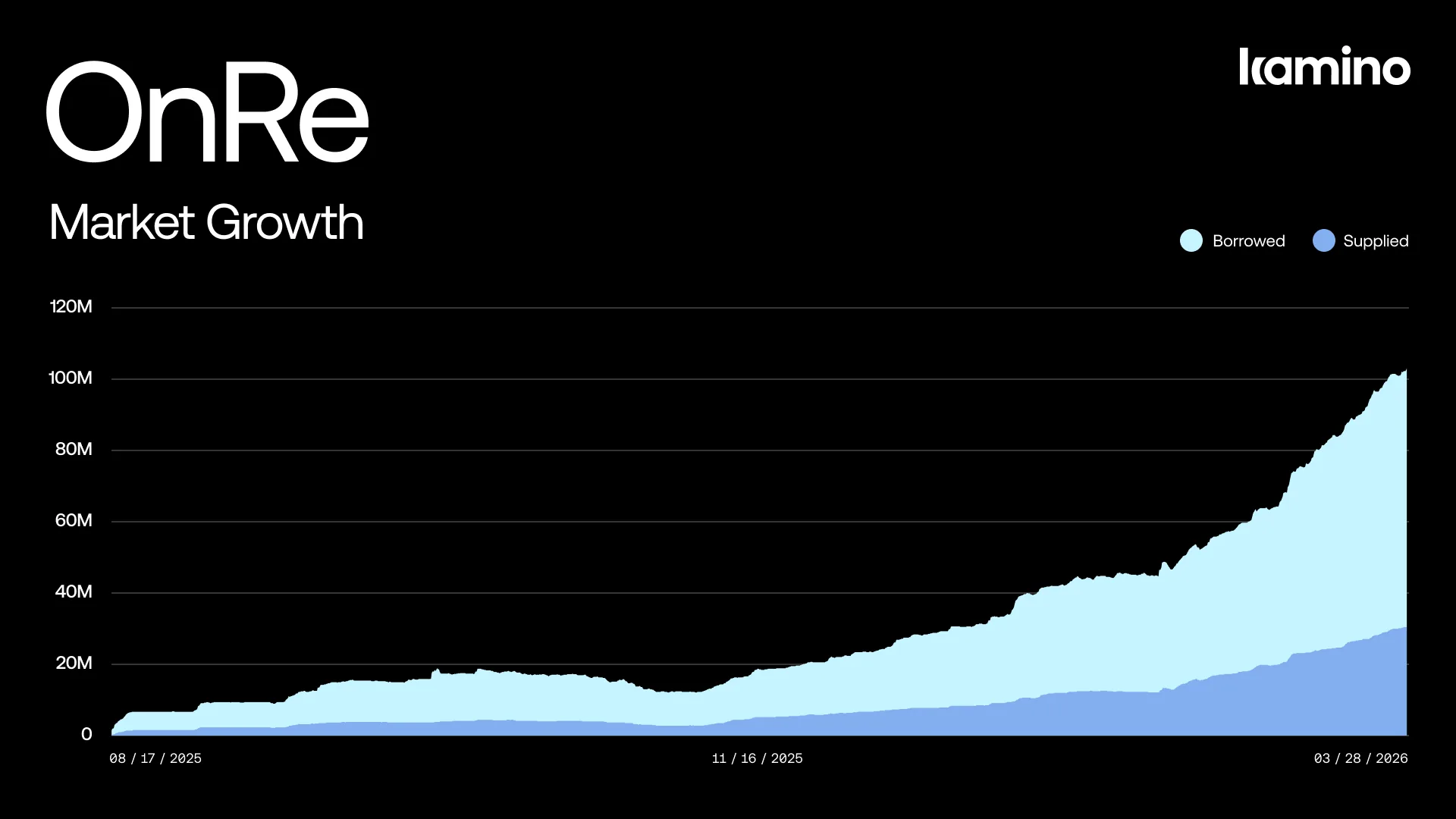
Superstate brought natively tokenized Galaxy shares onto Kamino's lending market, allowing eligible holders to borrow USDC against their position without selling. OnRe Finance deposits on Kamino crossed $100 million in market size, making it Kamino’s third-largest RWA market.
Source: Kamino
Additional RWA activity continued across the stack. xStocks unveiled a framework to connect Nasdaq’s tokenized equity markets with Solana DeFi. West Coast Stock Transfer adopted Alpha Ledger’s Vulcan Forge to tokenize Silo Pharma securities on Solana. Perena partnered with Plume’s NestCredit to open a dedicated Solana RWA vault.
Institutional and Enterprise Adoption
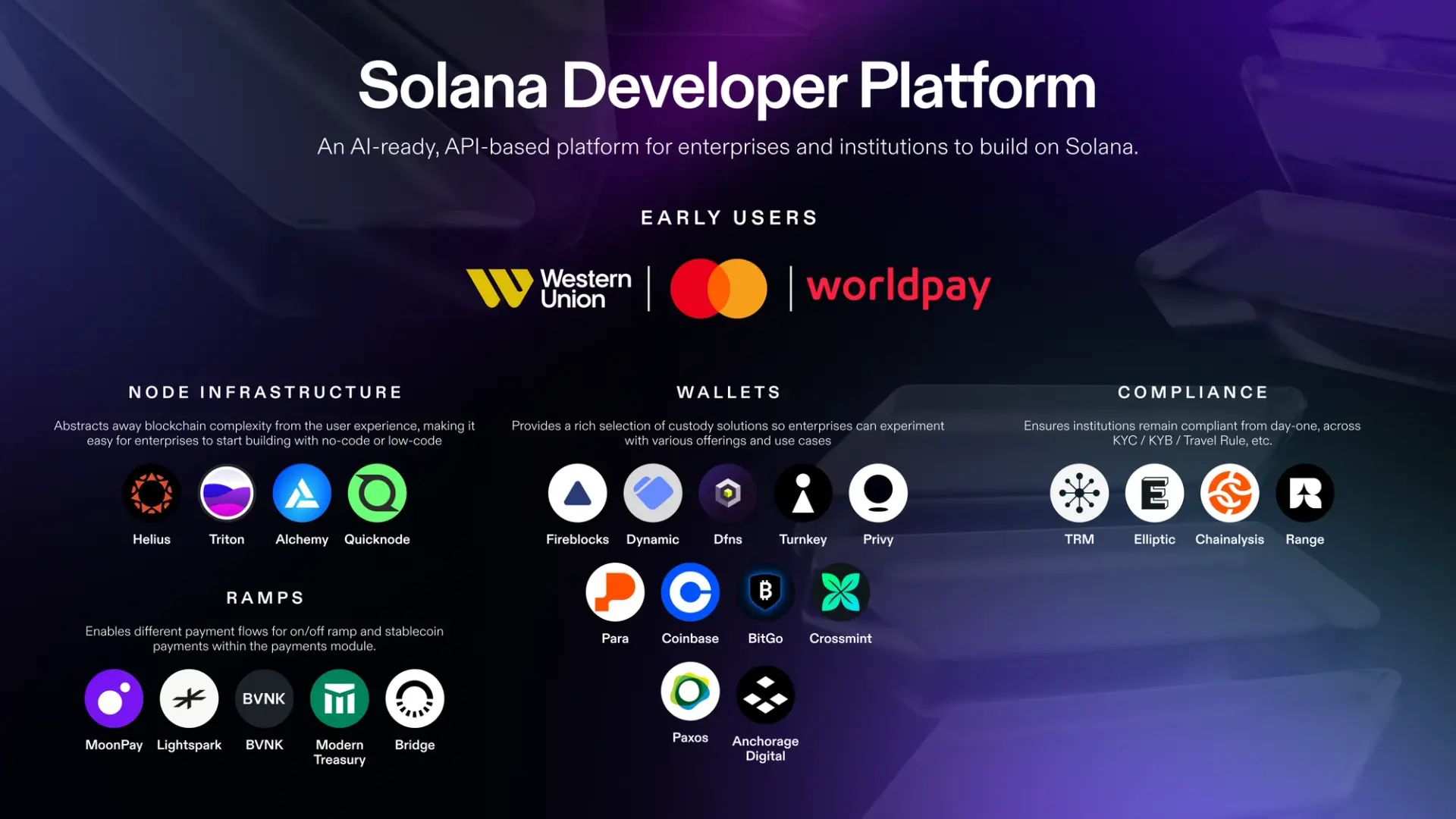
March also brought more enterprise infrastructure into production. On March 24, the Solana Foundation launched Solana Developer Platform (SDP), an API-based enterprise platform that brings together more than 20 infrastructure providers through a single interface. Its three modules cover issuance, including tokenized deposits, stablecoins, and RWAs; payments, including fiat and stablecoin flow orchestration; and trading, including atomic swaps, vaults, and onchain FX. The issuance and payments modules were live at launch, with trading planned for later in 2026. Mastercard, Worldpay, and Western Union were named as early users.
Institutional financial workflows expanded elsewhere on the network. Solana joined Mastercard’s Crypto Partner Program in early March. Aon settled the first stablecoin insurance premium using PYUSD on Solana through Paxos. Gusto integrated USDC payouts on Solana for same-day international contractor payments. Kamino announced a pilot that integrates Atlas Collateral Management with Anchorage Digital for institutional credit, and Kamino’s PRIME Market climbed to $570 million in market size during the same period.
Interactive Brokers (Nasdaq: IBKR), one of the world's largest brokerages, began offering SOL trading to eligible European investors, adding SOL alongside stocks, options, futures, and bonds on its platform.
Capital continued to move toward Solana-native teams. Kast raised an $80 million Series A co-led by QED Investors and Left Lane Capital. Kled raised a $5.5 million seed round for a data marketplace with payments on Solana. Backpack announced onchain IPO share allocations powered by Superstate.
Stablecoins and Payments
Stablecoin activity on Solana kept expanding in both size and product range. Total stablecoin supply on the network reached $17 billion in March (h/t: Artemis)
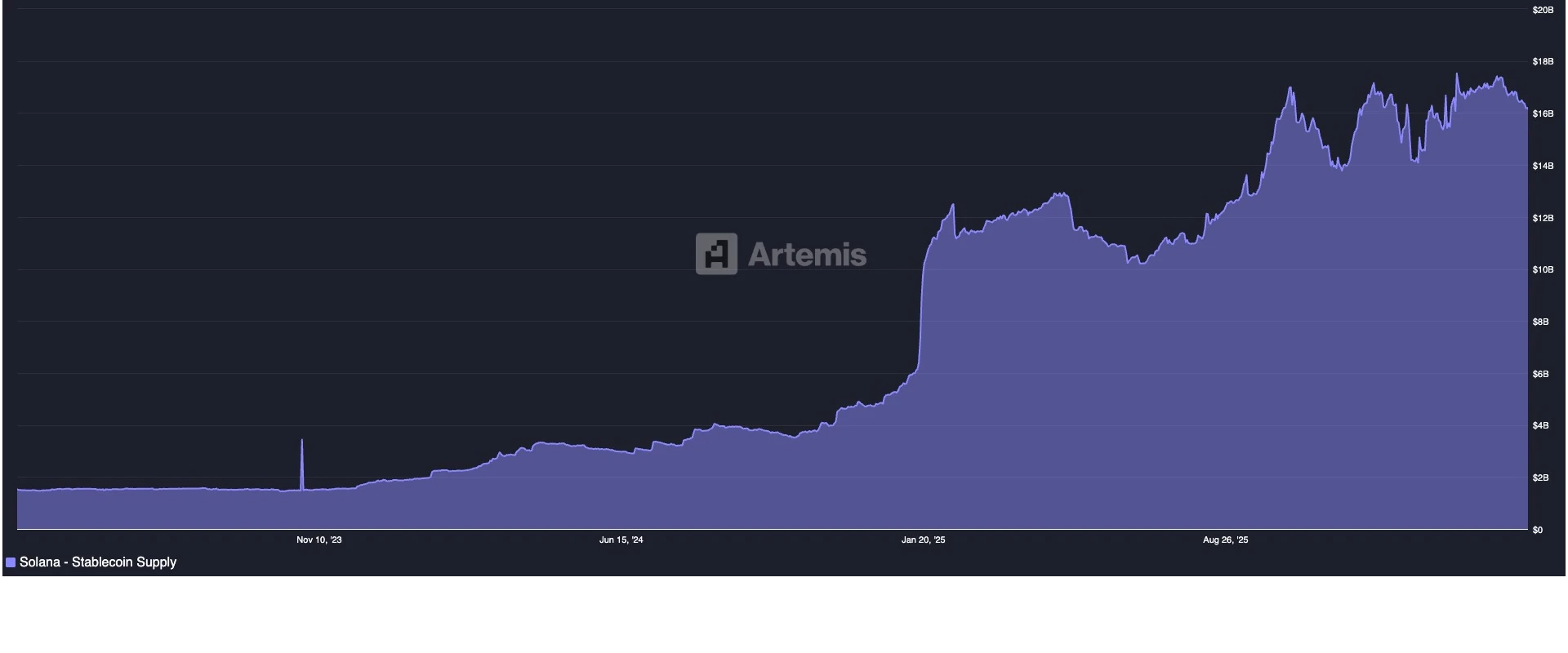
World Liberty Financial’s USD1 supply on Solana increased fivefold to $855 million over two months. Huma Finance passed $11 billion in total PayFi transaction volume. Credible Finance processed more than $350 million in payment volume in five months, with over half of that activity taking place on Solana.
New issuances added more regional and product variety to the network. PalmUSD’s PUSD, backed 1:1 by AED and SAR reserves, went live on Solana. Macropod launched AUDM, a regulated Australian dollar stablecoin. Exodus rolled out XO Cash, a USD-backed stablecoin powered by MoonPay. Crossmint partnered with Western Union to launch USDPT on Solana.
Payment rails and consumer access points kept widening. Sphere shipped Offloader Wallets for programmatic stablecoin-to-fiat conversion. SP3ND enabled eBay purchases with USDC on Solana. Altitude launched direct bank payments worldwide. Sana onchain introduced a self-custody Visa card issued by Rain Cards. SurfCash went live in Nigeria. Kast partnered with Pudgy Penguins to launch the Pengu Card on Visa across 150 million merchants. Raenest added Solana support for USDT and USDC deposits. Raise Network passed $20 million in gift card volume and 156,000 wallets.
DeFi and Trading
DeFi activity in March reflected a broader range of instruments and trading surfaces. Meteora released Dynamic Terminal with advanced LP tools. Orca launched Vaults powered by Kamino for automated liquidity yield strategies. Sunrise DeFi processed $545 million in 30-day volume and brought AVAX to Solana for native asset trading. Additional yield and LP products came from DeFi Carrot’s CRT, an aggregated yield token with protected leverage looping; Perena’s curated USDT vault in collaboration with Glow Finance; and Yield’s yoSOL vault with algorithmic optimization.
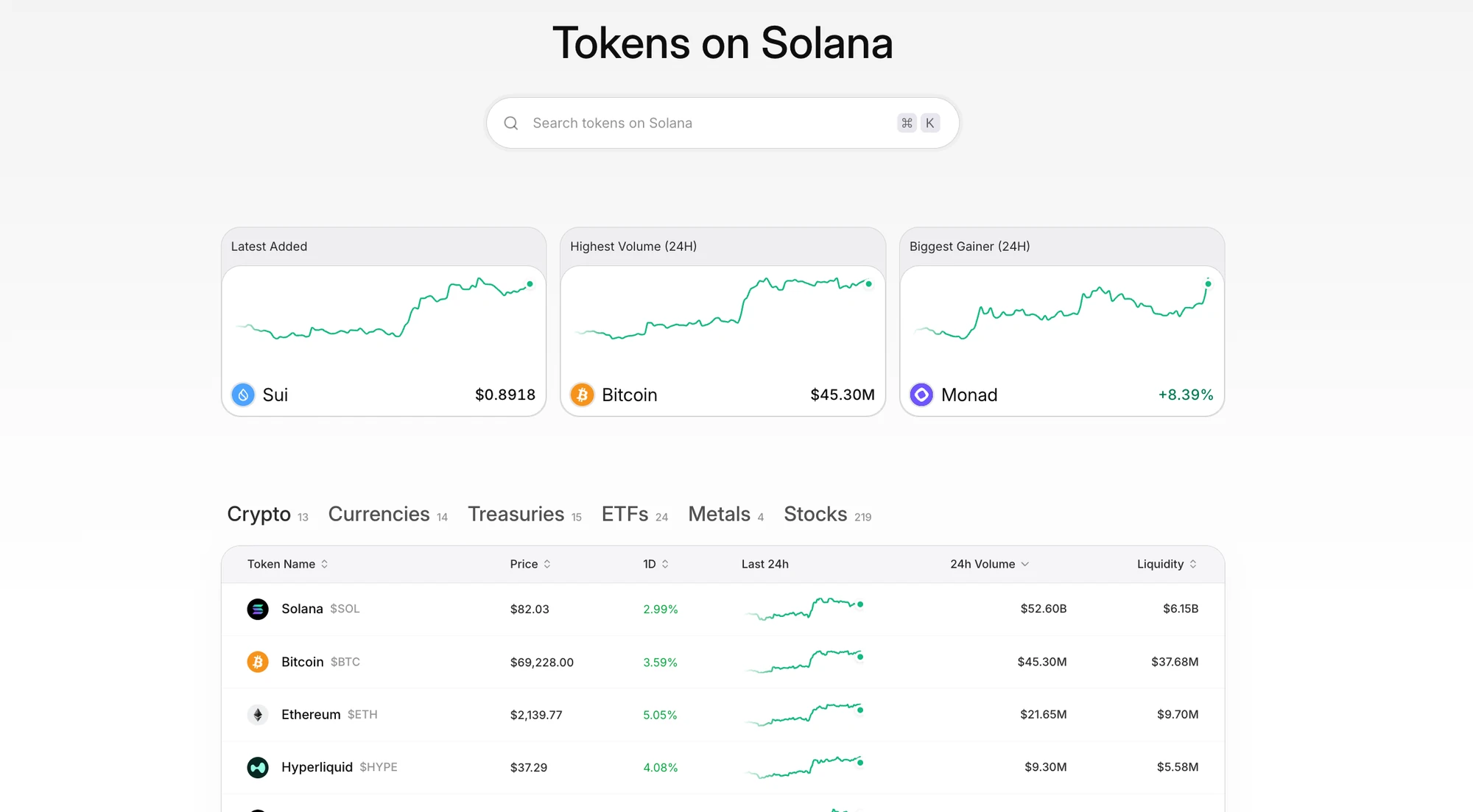
Derivatives and trading interfaces also expanded. Flash Trade listed a natural gas market. Derive XYZ shipped SOL options. Moonshot introduced leveraged positions through Apple Pay. GoDark opened early access to a decentralized dark pool DEX. Phoenix Trade activated referral codes for fee-sharing. Zerion added real-time PnL tracking for Solana traders. Mayan shipped Mayan 2.0 with faster cross-chain swaps. Tokens.xyz from Solana Foundation went live with 24/7 market coverage on Solana.
Prediction and social trading products saw a busy month as well. Duel Duck enabled custom predictions using any SPL token. Predictefy opened its public beta for cross-platform prediction market tracking. Kairos TradeX, Big Dance Fun, and Scorely each launched prediction and tournament-based trading products.
Additional trading infrastructure and platform launches continued alongside those products. Ant and Noah AI both integrated dFlow infrastructure. Paradex’s DIME debuted on Solana through Sunrise DeFi. Bulktrade, a perps platform, recorded 110,000 wallets, 45,000 traders, and 330,000 trades by day three of its testnet.
Consumer, Mobile, and Gaming
Consumer-facing launches spread across mobile, gaming, commerce, and everyday crypto access. Star Atlas released a major update with Holosim Chapter 2. PlaySolana premiered the first Gaming dApp Store on the PSG1 device. Sanctum launched its app on Solana Mobile. Walmart-backed OnePay added SOL, extending crypto access to its 3 million monthly active users. Solana Mobile launched Builder Grants to support mobile-native development.
Other consumer products continued to ship through the month. Fitted, a Solana-powered AI wardrobe assistant, announced partnerships with Taskrabbit and AccuWeather. CaptchaApp, a social platform focused on content authenticity, went live on Solana. TryCallShot opened its waitlist for a fantasy sports platform. Travala expanded car rental bookings to Solana. MetaDAO rolled out Futard.io for community-direct fundraising. Doppler Protocol rebuilt its token launch protocol natively on Solana. Blastgit shipped a platform for open-source software tokenization.
Privacy tools also gained ground. Hinkal Protocol released its privacy wallet in mid-March and later launched Hinkal Pay with ZK-powered payment privacy. Solflare introduced PAL as a native privacy layer for Private Send. Bungee Exchange debuted Bungee Incognito on Solana. VanishTrade integrated with Titan Exchange for private trading. Umbra opened its public TestFlight on iOS.
Agentic Commerce and x402
March brought another wave of activity around AI agents and machine-native payments on Solana. The Solana Foundation unveiled Agent Registry via Quantu AI, creating an onchain registry for verifiable AI agent identity. MoonPay open-sourced a wallet standard for AI agents, with support from more than 15 contributors including Solana.
The x402 payment protocol appeared across more infrastructure providers during the month. QuickNode open-sourced its x402 npm package for agentic USDC payments. Messari added Solana support for x402 payments across its API endpoints. Alchemy enabled Solana agents to pay for its APIs with USDC through x402. Agentmail introduced inbox creation for AI agents through the same payment standard.
Applications built on top of that stack kept arriving. AgentCard went live with support for paying for APIs, services, and prediction market trades. AgentCash launched a unified USDC balance for access to more than 250 APIs. Valeo Protocol introduced Valeo SPL Pay for API monetization. BlockRun AI went live with a unified API for more than 30 AI models, with Solana accounting for 30% of volume within eight days of the expansion. Zauth x402 launched Vector for web app security auditing. Anagram introduced the SolanaClaw Agent for executing Solana transactions through WhatsApp or Telegram. Alpha Arena brought AI-agent competition to chess and poker with USDC via x402.
The category also showed up in games, hackathons, and public experiments. PlayBabylon, a multiplayer prediction game for humans and AI agents, recorded 490,000 trades across 1,171 agents within five days of launch. StormRae AI ran a public AI red-teaming challenge with roughly 15,000 participants on Solana. Colosseum crowned the winners of the Agent Hackathon in mid-March and shipped Copilot, a product for using agents to support startup building. Trends.fun and Solana launched the Agent Economy Hackathon with $30,000 in prizes.
Infrastructure and Developer Tools
On the protocol side, March’s biggest technical proposal came from Anza. Constellation introduced a Multiple Concurrent Proposers (MCP) design for Solana that would replace the current single-leader block production model with a system where multiple proposers submit transactions at the same time. The proposal addresses transaction ordering and censorship resistance and fits into the broader upgrade path toward Alpenglow.
Other infrastructure work also advanced during the month. P-Token, or SIMD-0266, was approved in early March and went live on testnet in mid-March. The standard is designed to reduce token transfer computational costs by 95% to 98%, with mainnet deployment targeted for later in 2026. Light Protocol launched the Light Token SDK on mainnet, reducing Solana Associated Token Account fees to $0.001 for all SPL tokens, including USDC, PYUSD, and USDG.
Machine-native payment tooling expanded further. Solana added support for the Machine Payments Protocol (MPP) from Stripe and Tempo, with an SDK that handles any stablecoin on Solana, including SPL and Token-2022 assets, for API-based payment acceptance. QuickNode’s MPP integration added support for USDC payments on Solana. DoubleZero introduced DoubleZero Edge for real-time market data delivery to traders and market participants.
Compliance and developer tooling also continued to broaden. GLAM Systems introduced Token ACL, an access control list for compliance-aware token permissions. FairScale shipped L3Ns as a Chrome extension for wallet reputation scoring. SNS enabled .sol identity on NotDotMarket for human-readable onchain addresses. 8004 Scan added Solana support for ERC-8004 agent registration.
Hackathons, Events, and Builder Programs
Builder programs and events kept the calendar full through March and into the next quarter. Colosseum announced the Solana Frontier Hackathon, running from April 6 through May 11, with at least $2.5 million in planned investment for winning teams. Ranger Finance is hosting a hackathon with $1 million in vault TVL seed funding. StableHacks hosted a stablecoin hackathon with $200,000 in prizes in early March. CyreneAI launched Genesis Accelerator, offering Solana builders up to $100,000 in seed capital. The Solana Incubator also kicked off Cohort 4.
The event schedule widened across geographies. Solana Accelerate: Fintech, an invite-only working session in New York City, brought together leaders from over 140 companies including American Express, JP Morgan, Moneygram, Zelle, Apple, and Amazon for case studies and discussions on payments and stablecoin infrastructure built on Solana.
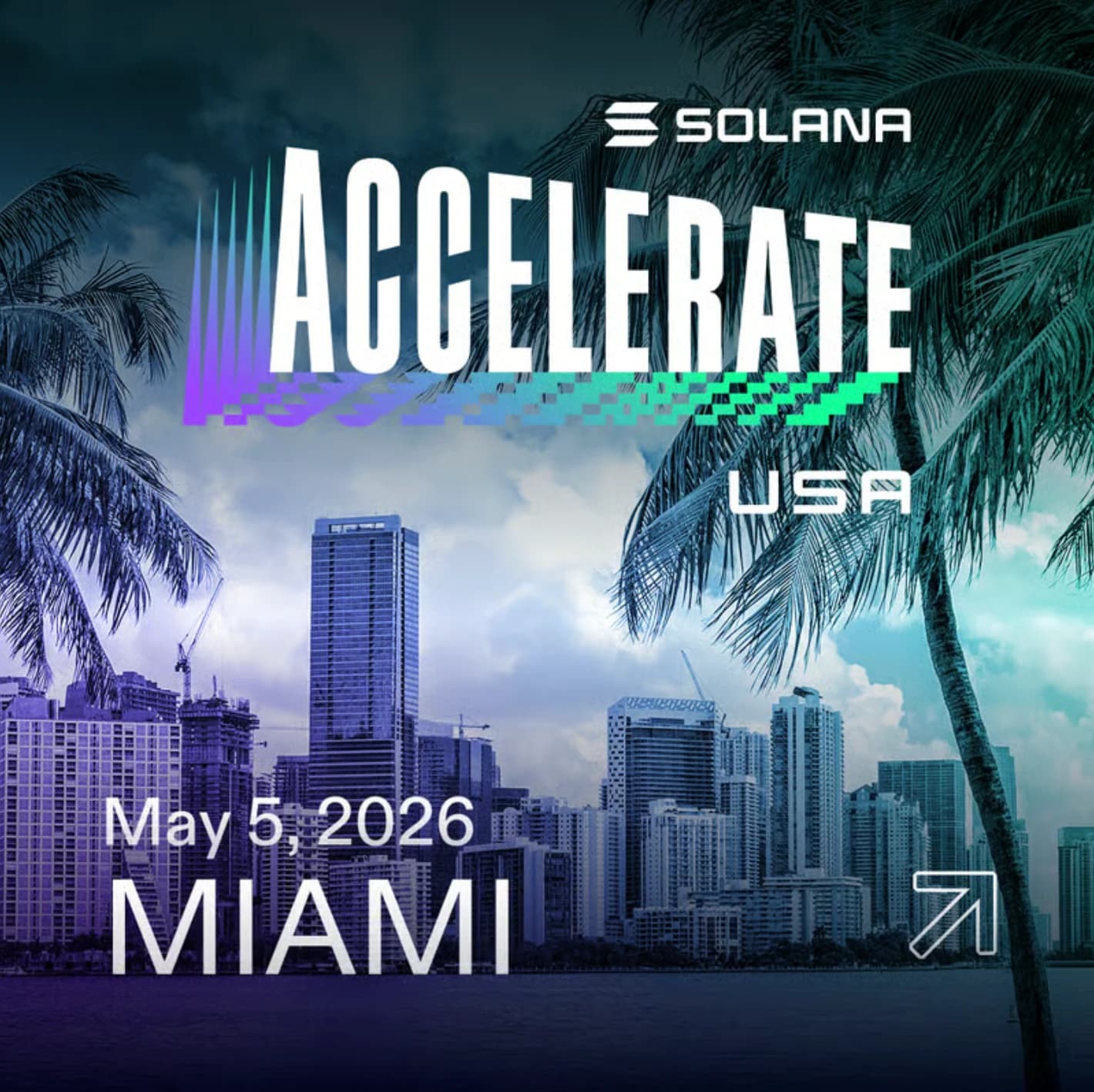
The Solana Institute announced Solana Summit: Washington x Wall Street for April 13 in New York City. Ship Week V3 was scheduled for Miami from May 4 to 10. Accelerate USA is set for Miami on May 5. Superteam DE announced the Solana Summit Germany in Berlin on June 13.
Community programs continued to expand alongside those events: Superteam USA launched to support founders in the United States and Superteam Talent kicked off Talent Tour 2026 to recruit builders from global talent hubs. SharkPool announced a Solana On-Campus Tour spanning 15 U.S. university events. Solana developers began the Japan Developer Bootcamp. Superteam and Network School partnered to offer Solana startups their first month free at Network School.
Late March also brought a developer milestone, with more than 10,000 all-time unique developers on the network. April opens with a full builder calendar and a larger set of live products across payments, RWAs, trading, consumer apps, and agent-driven commerce.